
When people think about lowering their energy bills, they often picture solar panels, smart thermostats or energy-efficient appliances. While those features can certainly make a difference, the biggest impact happens much earlier, before a shovel ever hits the ground.
The decisions made during the design and construction process shape how efficiently a home performs for years to come. From the way it’s insulated to how it’s sealed and ventilated, every choice works together to create a home that’s more comfortable, more durable and less expensive to operate. At Habitat Studio, those decisions are part of every home we build.

Building Better Starts Behind the Walls
Some of the most important features in an energy-efficient home are the ones you’ll never notice.
A well-designed building envelope helps keep warm air inside during the winter, blocks unwanted heat in the summer and reduces the workload your heating and cooling systems need to do. Habitat Studio builds well beyond minimum code requirements, with exterior wall insulation ranging from R28 to R40 or higher, basement frost walls insulated from R30 to R40, and attic insulation reaching R60 to R100.
Insulation is only part of the equation. Air leaks around windows, lighting and electrical outlets can quietly drive up energy use, even in a well-insulated home. Habitat Studio uses energy analysis and blower door testing to measure how airtight each home is, helping ensure less heat escapes and conditioned air stays where it belongs. The result is a home with fewer drafts, more consistent temperatures and significantly less heat loss.
Triple-pane, argon-filled windows with Low-E coatings also make a noticeable difference. They help reduce heat transfer, minimize condensation and eliminate the chilly feeling that often comes from sitting near a window on a cold Alberta day.
The same attention to detail extends below your feet. Insulation beneath the basement slab helps keep floors warmer and reduces heat loss, while a radon barrier adds another layer of protection. Waterproofing, weeping tile and proper drainage complete the system, helping keep moisture away from the home’s foundation for years to come.
Designed for the Future
Building an efficient home isn’t just about today’s needs. It’s also about making smart decisions that give homeowners more flexibility down the road.
Every Habitat Studio home is designed with roof trusses capable of supporting future solar panels, making it easier to add renewable energy if and when the time is right. A reversible electrical meter is another small detail that helps simplify that transition.
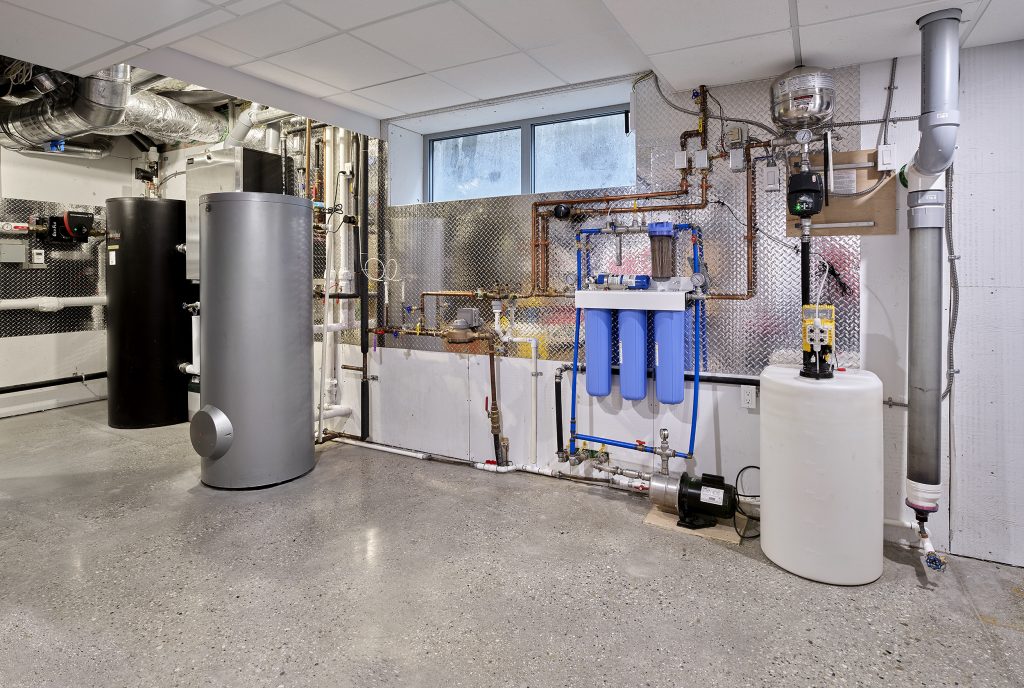
Inside the home, high-efficiency direct-vent mechanical systems work alongside a heat recovery ventilation (HRV) system that continuously brings fresh air indoors while capturing heat that would otherwise be lost. Because the home has already been designed to reduce energy waste, these systems can operate more efficiently while maintaining a comfortable indoor environment.
The features that save the most energy rarely become the focal point of a home. They’re tucked behind drywall, beneath concrete and above the ceiling, quietly doing their job every day. While beautiful finishes may be what our homeowners fall in love with first, it’s the decisions made long before those finishes are installed that continue paying off for decades.